Wender·Vista
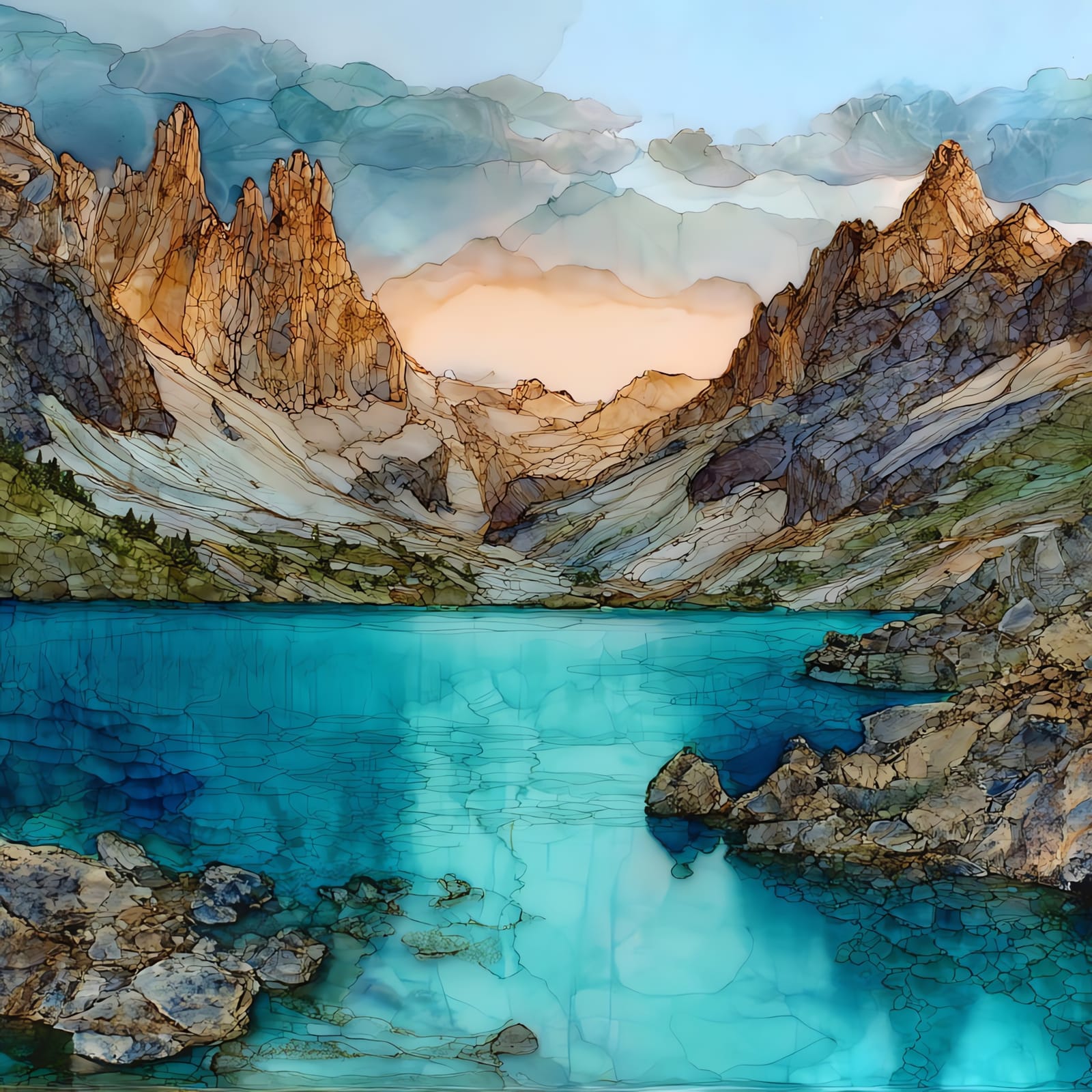
Lago di Braies
shown on ceramic tileItaly
high in the Dolomites of South Tyrol

Lago di Braies

— green water, still enough to hold the mountain.

— Dolomites wall art on a ceramic tile, made to order
from $25
Size
Display
Frame color
$55
6 × 6 in, black frame · see it larger ↓
★ 4.9 from 488 Etsy reviews. Finished by hand in Knoxville. Free US shipping; on your wall in about ten days. Damaged in transit? Free replacement within 30 days; other returns within 30 days. Returns · Contact
— Where it lives

Not only on a wall.

A small tile on the nightstand catching the morning. A larger one above the fire. Yours, wherever you spend the slow hours.
Above the bench, in a tan frame.
— Above the bench, in a tan frame.
Beside the kettle, propped on the counter.
— Beside the kettle, propped on the counter.
Above the linens, in a slim black frame.
— Above the linens, in a slim black frame.
On the nightstand, on a light oak stand.
— On the nightstand, on a light oak stand.
On a picture ledge, where the light comes in.
— On a picture ledge, where the light comes in.
6 × 6 in tile, black floating frame
— 6 × 6 in tile, black floating frame
— bring it home

Lago di Braies, on ceramic.

Each tile is finished by hand in our Knoxville studio. Artwork is slowly infused into the ceramic surface under high heat and pressure, and rests beneath a thin glossy finish. The colour lives in the surface, not on top of it.

Size
6 × 6 in · 15 cm · the popular one: counter, shelf, nightstand
Display
In a floating frame, ready to hang. Pick the frame color.
Frame color
$55
Hand-finished and shipped from our studio at the foot of the Smokies. On your wall in about ten days.
— size
6 × 6 in
15 cm
— weighs
1.6 lb
the tile alone, solid in the hand
— surface
ceramic, hand-finished
art rests beneath a thin glossy finish
— from
Knoxville, TN
our family studio, at the foot of the Smokies
or build a grouping
— or build a grouping

Three or five different vistas, hung together — a chapter of places you've been, or want to go.

— a note from the studio

“A lake at the end of the Val di Braies, in the far north of the Dolomites. A wall of pale stone, Croda del Becco, stands straight up out of the south end, and on a still morning the whole of it lies in the green water. A wooden boathouse keeps a line of rowboats along the near shore. By mid-morning the buses come up from the valley and the path around the water fills; before nine it is quiet, and the colour is deepest then. The Alta Via 1 starts here and climbs out of sight. People take a boat out and stop rowing, and let it sit.”

from the studio
— about Lago di Braies

The place, in three passes.

A little of what's known, in case you fall down the rabbit hole — or want to go see it yourself.
— the place

Lago di Braies, the Pragser Wildsee, sits at 1,496 metres at the head of the Val di Braies, in the province of Bolzano in South Tyrol, the German-speaking far north of the Dolomites near the Austrian border. It is a barrage lake, formed when a landslide off the Herrstein dammed the Braies stream, and at about 31 hectares it is one of the largest natural lakes in the Dolomites. The pale wall of Croda del Becco, the Seekofel, rises to 2,810 metres straight off the south shore. The lake lies inside the Fanes-Sennes-Prags Nature Park, part of the Dolomites named a UNESCO World Heritage Site in 2009. The classic Alta Via 1, the first of the long Dolomite high routes, begins at the water's edge.

— the colour

The water reads emerald green, deepest and clearest in early summer when the snowmelt is highest and the silt has settled. The lake is fed by cold underground springs and meltwater rather than a glacier, so the colour comes less from suspended rock flour than from depth and the clarity of the cold water over a pale bed; it shifts toward a darker teal as the season turns. On a still morning the surface goes to glass, and the whole grey wall of Croda del Becco stands upside down in it, the wooden boathouse and its line of rowboats with it. The maximum depth is 36 metres, enough that the centre holds a colder, deeper colour than the shallows.

— informed by Wikipedia
— the visit

The Grand Hotel Pragser Wildsee, built in 1899 and still run by the same family, stands at the north end, and the wooden boathouse below it rents rowboats through the summer. Getting here takes planning. From roughly July to mid-September the valley road closes to private cars during the day, about nine in the morning to four in the afternoon, and the lake is reached by the 442 bus from Dobbiaco and Villabassa, by booked parking, by bike, or on foot; the early hour before the buses is the quiet one. In winter the lake freezes hard enough to walk on, and curling matches have been held on the ice since 2012. The Alta Via 1 climbs out from the south shore toward Croda del Becco.

— where
Italy · Bolzano, South Tyrol
— within
Fanes-Sennes-Prags Nature Park
— elevation
1,496 m · 4,908 ft
— position
46.6947° N · 12.0844° E
— the neighborhood

What's nearby.

A handful of named places within an hour's walk or short drive. Some are already on tile; some will be.
3 km S
Croda del Becco
peak
9 km N
Villabassa
village
11 km N
Lago di Dobbiaco
lake
13 km NE
Dobbiaco
town
18 km SE
Tre Cime di Lavaredo
peaks
28 km S
Cortina d'Ampezzo
town
N
Lago di Braies
Croda del Becco
Villabassa
Lago di Dobbiaco
Dobbiaco
Tre Cime di Lavaredo
Cortina d'Ampezzo
— common questions

What people ask.

A few questions we get about Lago di Braies — and about bringing the piece home.
— about the place

Lago di Braies, or Pragser Wildsee, lies at 1,496 metres at the head of the Val di Braies in the province of Bolzano, South Tyrol, in the far north of the Italian Dolomites near the Austrian border. It sits within the Fanes-Sennes-Prags Nature Park.

The lake reads emerald green because it is fed by cold underground springs and snowmelt over a pale bed, deepest in colour in early summer when the melt is highest. It is not glacier-fed, so the green shifts toward a darker teal as the season turns.

From about July to mid-September the valley road closes to private cars during the day, roughly nine to four. In that window the lake is reached by the 442 bus from Dobbiaco and Villabassa, by pre-booked parking, by bike, or on foot. Arriving before nine avoids the restriction.

Early summer mornings, before the buses arrive, when the water is greenest and the surface is still. July and August are warmest and busiest. The lake freezes over in winter, hard enough to walk on, and curling matches have run on the ice since 2012.

Yes. A wooden boathouse at the north end rents rowboats through the summer, the classic way to see the lake from the water. Swimming is allowed, but the water is cold, fed by springs and snowmelt and rarely warming much even in August.

It is a barrage lake. A landslide off the Herrstein dammed the Braies stream, ponding the water at 1,496 metres against the foot of Croda del Becco. The lake reaches a maximum depth of 36 metres, among the deepest in the province of Bolzano.

Croda del Becco, known in German as the Seekofel, rises to 2,810 metres straight off the south shore. The classic Alta Via 1, the first of the long Dolomite high routes, starts at the lake and climbs toward it.

— about the piece in your home

It has carried well for travellers with ties to South Tyrol and the Dolomites. Lago di Braies is the lake many people picture first when they think of the range, the green water and the rowboats below Croda del Becco. A Small or Medium with a note from the studio travels well.

The emerald-green water and pale stone in the piece sit well in Alpine-modern, biophilic, and warm Minimalist rooms. The green gives a quiet focal point against wood and natural stone, and holds the eye over a console or a bed.

Yes. Alpine-modern and biophilic interiors lean on natural greens, wood, and stone, which the piece carries in one calm image. The deep lake green works as the single point of colour in an otherwise neutral, organic room. A Medium suits a shelf or bench.

The 12 × 12 inch tile in a frame is our largest single piece and suits a console, a desk wall or a narrow space. Above a full-size sofa, hang three or five framed 12-inch tiles together as a grouping.

Yes, on a wall or shelf away from direct spray. The color is infused into the ceramic under high heat and pressure, so steam and humidity do not affect it, and the glossy surface wipes clean with a soft damp cloth.

A microfibre cloth and plain water. The colour is slowly infused into the ceramic surface under high heat and pressure and lives beneath a thin glossy finish, so it will not lift or fade with normal wiping. No solvents needed.

Yes. Every WenderVista piece is original to Wender Studios, our family studio in Knoxville, Tennessee. The art is hand-finished in-house and never licensed from anyone else. Reid Wender curates each place in the atlas.

— if this one stayed with you

A few you might also love.

Same air, same kind of quiet.
Lake Anterselva Antholzer See
high in South Tyrol, near the Austrian border
Lake Anterselva Antholzer See
— the eight minutes after the sun is gone.
Lago di Sorapis
high in the Dolomites
Lago di Sorapis
— the blue the storm leaves behind.
Lake Sorapis in Summer
high in the Dolomites, above Cortina d'Ampezzo
Lake Sorapis in Summer
— a turquoise the snow gives back in July.
Lake Misurina in Summer
high in the Dolomites, below the Tre Cime
Lake Misurina in Summer
— the morning the mountains lie still on the water.
Lake Sorapis Frozen in Winter
high in the Dolomites, above Cortina
Lake Sorapis Frozen in Winter
— where the blue waits out the winter.
Alberobello Trulli
in Puglia's Itria Valley, southeast of Bari
Alberobello Trulli
— a town built to come apart, and never did.
Alghero
on the Coral Riviera, in northwest Sardinia
Alghero
— the walls go gold when the sea takes the sun.
Alpe di Siusi
in the Dolomites, under the Sassolungo
Alpe di Siusi
— the green that runs all the way to the rock.
Amalfi Cathedral
on the Amalfi Coast, at the top of the steps
Amalfi Cathedral
— the gold at the top of the climb.
Amalfi Lemon Grove
on the cliffs above Amalfi, south of Naples
Amalfi Lemon Grove
— the yellow that hangs in the shade above the sea.
Aosta Roman Gate
in Aosta, the Roman town under the Alps
Aosta Roman Gate
— still the way in, two thousand years on.
Appian Way
running south out of Rome
Appian Way
— the road that outlived the empire that built it.
— a collection

The Italian Dolomites,
place by place.

The valleys between Cortina and Val Gardena, the tarns you walk an hour to see, the towers that turn the colour of a banked fire just before dark. Wander the collection by valley, by season, or follow the path Reid walked.

Tre Cime
Braies
Misurina
Sorapis
Cinque Torri
Sassolungo
Marmolada