Wender·Vista
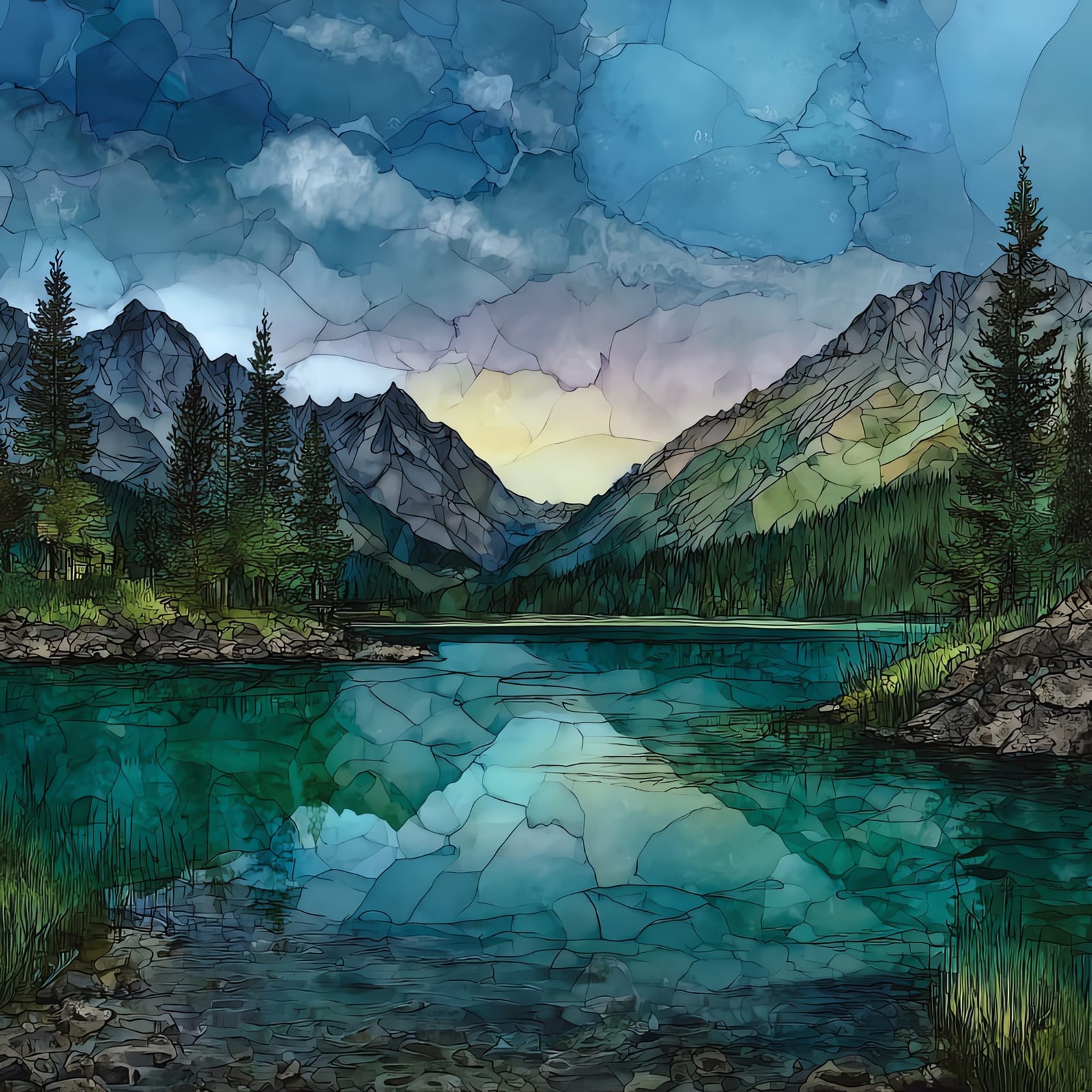
Lake Anterselva in Winter
shown on ceramic tileItaly
deep in South Tyrol's Antholz Valley

Lake Anterselva in Winter

— the colour the cold leaves behind.

— South Tyrol wall art on a ceramic tile, made to order
from $25
Size
Display
Frame color
$55
6 × 6 in, black frame · see it larger ↓
★ 4.9 from 488 Etsy reviews. Finished by hand in Knoxville. Free US shipping; on your wall in about ten days. Damaged in transit? Free replacement within 30 days; other returns within 30 days. Returns · Contact
— Where it lives

Not only on a wall.

A small tile on the nightstand catching the morning. A larger one above the fire. Yours, wherever you spend the slow hours.
Above the bench, in a tan frame.
— Above the bench, in a tan frame.
Beside the kettle, propped on the counter.
— Beside the kettle, propped on the counter.
Above the linens, in a slim black frame.
— Above the linens, in a slim black frame.
On the nightstand, on a light oak stand.
— On the nightstand, on a light oak stand.
On a picture ledge, where the light comes in.
— On a picture ledge, where the light comes in.
6 × 6 in tile, black floating frame
— 6 × 6 in tile, black floating frame
— bring it home

Lake Anterselva in Winter, on ceramic.

Each tile is finished by hand in our Knoxville studio. Artwork is slowly infused into the ceramic surface under high heat and pressure, and rests beneath a thin glossy finish. The colour lives in the surface, not on top of it.

Size
6 × 6 in · 15 cm · the popular one: counter, shelf, nightstand
Display
In a floating frame, ready to hang. Pick the frame color.
Frame color
$55
Hand-finished and shipped from our studio at the foot of the Smokies. On your wall in about ten days.
— size
6 × 6 in
15 cm
— weighs
1.6 lb
the tile alone, solid in the hand
— surface
ceramic, hand-finished
art rests beneath a thin glossy finish
— from
Knoxville, TN
our family studio, at the foot of the Smokies
or build a grouping
— or build a grouping

Three or five different vistas, hung together — a chapter of places you've been, or want to go.

— a note from the studio

“The lake freezes by mid-December and holds through March. The biathlon arena three kilometres down the valley fills with cowbells and floodlights for the World Cup; the lake itself stays out of all that. Cross-country tracks loop the shore through larch and spruce, marked but rarely crowded. Above the lake, the Rieserferner Group sits up white against the sky, the range that anchors the view from Brunico on a clear day. The valley road climbs just past the lake to the Staller Sattel, closed once the snow comes. The eight minutes after sunset are when the blue goes everywhere.”

from the studio
— about Lake Anterselva in Winter

The place, in three passes.

A little of what's known, in case you fall down the rabbit hole — or want to go see it yourself.
— the place

Lake Anterselva (Antholzer See in German, Lago di Anterselva in Italian) sits at 1,642 metres (5,387 feet) in the Antholz Valley, a side branch off the Val Pusteria in South Tyrol. It is the third-largest natural lake in the province, about 44 hectares of water held against the western flank of the Rieserferner Group. The lake and the valley above it form the southern gateway of the Naturpark Rieserferner-Ahrn, a 31,505-hectare alpine reserve that runs north into Austrian Tyrol at the Staller Sattel pass. Brunico is the nearest market town, an hour's drive west; Bolzano lies roughly seventy kilometres further on. The lake belongs to the municipality of Rasen-Antholz.

— the season

The lake usually freezes solid by mid-December and stays under ice until the second half of March. The cycle is reliable enough that the Antholz cross-country trail network, about thirty kilometres of marked Loipen, anchors itself around the shore as soon as the snow sets. Daylight at this latitude in January runs roughly nine hours, with the sun clearing the eastern ridge late and dropping behind the Rieserferner Group well before five. The blue hour is long here. Spring melt comes slowly: the ice retreats from the shallow north end first, then opens through April; by June the lake is liquid again and the high pasture above it has reopened.

— the silence

What sets winter at Anterselva apart is the gap between the loudest sport in alpine Italy and the quietest water. The Sudtirol Arena, three kilometres down the valley at the Antholz-Obertal site, hosts the IBU Biathlon World Cup every January and will host the biathlon events of the 2026 Winter Olympics. Race days bring cowbells and the volley of small-bore rifles on the range. At the lake itself, the air does the opposite. The valley road climbs above the lake only as far as the Staller Sattel, a 2,052-metre pass that closes when the snow comes; through traffic to Austria stops here. What is left is a frozen surface, a larch ring, and the ridge.

— where
Italy · Rasen-Antholz, South Tyrol
— within
Rieserferner-Ahrn Nature Park
— elevation
1,642 m · 5,387 ft
— position
46.8660° N · 12.1150° E
— the neighborhood

What's nearby.

A handful of named places within an hour's walk or short drive. Some are already on tile; some will be.
3 km S
Sudtirol Arena Alto Adige
biathlon stadium
3 km S
Antholz-Obertal
alpine village
5 km N
Staller Sattel
alpine pass
6 km S
Antholz Mittertal
alpine village
12 km S
Rasen-Antholz
municipality seat
27 km W
Brunico
market town
N
Lake Anterselva in Winter
Sudtirol Arena Alto Adige
Antholz-Obertal
Staller Sattel
Antholz Mittertal
Rasen-Antholz
Brunico
— common questions

What people ask.

A few questions we get about Lake Anterselva in Winter — and about bringing the piece home.
— about the place

Lake Anterselva (Antholzer See in German, Lago di Anterselva in Italian) sits at 1,642 metres in the upper Antholz Valley, a side valley off the Val Pusteria in South Tyrol, Italy. It is the third-largest natural lake in the province, in the municipality of Rasen-Antholz.

The Antholz Valley sits at elevation in the eastern Italian Alps; the lake basin is at 1,642 metres and ringed by the Rieserferner Group. Cold air pools in the valley through December, and the surface ices over reliably from mid-December through the second half of March.

From Brunico, drive about half an hour east along the SS49, then north up the Antholz Valley road. The road climbs as far as the lake and the Antholz-Obertal trailheads; the Staller Sattel pass just above the lake closes from mid-November through May, so there is no through traffic to Austria.

The Sudtirol Arena Alto Adige sits about three kilometres down-valley from the lake, at Antholz-Obertal. It hosts the IBU Biathlon World Cup each January and is the biathlon venue for the 2026 Milano-Cortina Winter Olympics. It is one of the established stops on the World Cup circuit.

Locals do, in deep winter, but the lake is not officially patrolled or maintained as a skating venue, and conditions vary year to year. The groomed winter activity in the valley is cross-country skiing on the Antholz Loipen, which loop along the shore through larch and spruce.

The blue hour after the sun drops behind the Rieserferner Group, roughly between 4:45 and 5:15 in January, when the snow and ice carry a sustained blue across the valley. Mornings can stay deep cold and still well past sunrise, with the eastern shore in shadow.

Yes. The lake sits at the southern edge of the Naturpark Rieserferner-Ahrn (Parco Naturale Vedrette di Ries-Aurina), a 31,505-hectare nature park that runs north into the Tauern Range and crosses into Austrian Tyrol at the Staller Sattel pass.

— about the piece in your home

The Sudtirol Arena draws biathlon fans every January, and the valley itself is one of the quieter winter corners of the Alps. A Small or Medium reads well.

The piece sits well in alpine-modern, jewel-tone maximalist, and warm minimalist rooms. The blues and silvers of the winter palette pair with warm wood, off-white wool, and pewter or unlacquered brass hardware. It also holds its own as a single statement on a deep neutral wall.

The blue-hour palette and the dark-wood notes track with the current alpine-modern direction: pale plaster walls, dark stained pine, vintage textiles. The stained-glass treatment carries more colour density than a typical alpine print, so it lifts a quiet room rather than blending into one.

The 12 × 12 inch tile in a frame is our largest single piece and suits a console, a desk wall or a narrow space. Above a full-size sofa, hang three or five framed 12-inch tiles together as a grouping.

Yes, on a wall or shelf away from direct spray. The color is infused into the ceramic under high heat and pressure, so steam and humidity do not affect it, and the glossy surface wipes clean with a soft damp cloth.

A soft microfibre cloth and water. For occasional smudges, a small amount of mild dish soap is fine. Skip household solvents, scouring pads, and abrasive cleaners. The colour lives in the ceramic surface itself, beneath a thin glossy finish, and cleans without losing detail.

Yes. Reid Wender curates the atlas and selects what enters it; the work is hand-finished in our Knoxville, Tennessee shop. There is no licensing and no third-party catalogue behind the piece.

— if this one stayed with you

A few you might also love.

Same air, same kind of quiet.
Lake Anterselva Antholzer See
high in South Tyrol, near the Austrian border
Lake Anterselva Antholzer See
— the eight minutes after the sun is gone.
Lago di Anterselva
South Tyrol, twilight
Lago di Anterselva
— the eight minutes after the sun is gone.
Lake Misurina Winter
in the Dolomites, on the road to the Tre Cime
Lake Misurina Winter
— the mirror the cold lays flat.
Lago di Braies
high in the Dolomites of South Tyrol
Lago di Braies
— green water, still enough to hold the mountain.
Lake Sorapis Frozen in Winter
high in the Dolomites, above Cortina
Lake Sorapis Frozen in Winter
— where the blue waits out the winter.
Alberobello Trulli
in Puglia's Itria Valley, southeast of Bari
Alberobello Trulli
— a town built to come apart, and never did.
Alghero
on the Coral Riviera, in northwest Sardinia
Alghero
— the walls go gold when the sea takes the sun.
Alpe di Siusi
in the Dolomites, under the Sassolungo
Alpe di Siusi
— the green that runs all the way to the rock.
Amalfi Cathedral
on the Amalfi Coast, at the top of the steps
Amalfi Cathedral
— the gold at the top of the climb.
Amalfi Lemon Grove
on the cliffs above Amalfi, south of Naples
Amalfi Lemon Grove
— the yellow that hangs in the shade above the sea.
Aosta Roman Gate
in Aosta, the Roman town under the Alps
Aosta Roman Gate
— still the way in, two thousand years on.
Appian Way
running south out of Rome
Appian Way
— the road that outlived the empire that built it.
— a collection

The Italian Dolomites,
place by place.

The valleys between Cortina and Val Gardena, the tarns you walk an hour to see, the towers that turn the colour of a banked fire just before dark. Wander the collection by valley, by season, or follow the path Reid walked.

Tre Cime
Braies
Misurina
Sorapis
Cinque Torri
Sassolungo
Marmolada